Well, its been over two months since me and my husband quit using shampoo and conditioner on our hair.
We've been using Baking Soda and Apple Cider Vinegar instead. (see my previous post in March about No Pooing if you want the recipe we use)
Our hair is in great condition, it feels good and I would say that there's not anything I miss about using regular shampoo and conditioner. In fact, I used to have to wash my hair daily or it would get too oily to style. Since I've been No Pooing, I've gone as long as 5 days without washing and as little as 2. And can you say - CHEAP? I haven't calculated out just how cheap, but I was paying about 8 bucks a bottle before on my salon shampoo. And now i use about a Tablespoon of baking soda and a Tablespoon of vinegar everytime i wash my hair, which isnt even every day. :) so there's some serious savings there.....
:) So, if you are curious about it and want to give it a try - go for it! You dont have anything to lose! Feel free to bombard me with questions you have too. I will be happy to answer them. :)
UPDATE (5/13/2013): Still no pooing! Its great! Love it!
Tuesday, May 29, 2012


Thursday, April 26, 2012
If you are going to eat sugar, Try not to eat Fructose, Here's why:
A great article about why you should pay attention to what is in YOUR food.
Fructose is not processed the same in your body as Glucose, which is the fuel for all cells in your body. I have copied and pasted the article here (I never can seem to get "links" to work on my blog)
Sugar May Be Bad, But This Sweetener is Far More Deadly
Scientists have proved for the first time that fructose, a cheap form of sugar used in thousands of food products and soft drinks, can damage human metabolism and is fueling the obesity crisis. Fructose, a sweetener usually derived from corn, can cause dangerous growths of fat cells around vital organs and is able to trigger the early stages of diabetes and heart disease. Over 10 weeks, 16 volunteers on a controlled diet including high levels of fructose produced new fat cells around their heart, liver and other digestive organs. They also showed signs of food-processing abnormalities linked to diabetes and heart disease.
Another group of volunteers on the same diet, but with glucose sugar replacing fructose, did not have these problems.
Dr. Mercola's Comments: This study takes its place in a growing lineup of scientific studies demonstrating that consuming high-fructose corn syrup is the fastest way to trash your health. It is now known without a doubt that sugar in your food, in all it's myriad of forms, is taking a devastating toll. And fructose in any form -- including high-fructose corn syrup (HFCS) and crystalline fructose -- is the worst of the worst!
Fructose is a major contributor to: Insulin resistance and obesity
Elevated blood pressure
Elevated triglycerides and elevated LDL
Depletion of vitamins and minerals
Cardiovascular disease, liver disease, cancer, arthritis and even gout
A Calorie is Not a Calorie
Glucose is the form of energy you were designed to run on. Every cell in your body, every bacterium -- and in fact, every living thing on the Earth--uses glucose for energy. If you received your fructose only from vegetables and fruits (where it originates) as most people did a century ago, you'd consume about 15 grams per day -- a far cry from the 73 grams per day the typical adolescent gets from sweetened drinks. In vegetables and fruits, it's mixed in with fiber, vitamins, minerals, enzymes, and beneficial phytonutrients, all which moderate any negative metabolic effects. It isn't that fructose itself is bad -- it is the MASSIVE DOSES you're exposed to that make it dangerous.
There are two reasons fructose is so damaging: Your body metabolizes fructose in a much different way than glucose. The entire burden of metabolizing fructose falls on your liver. People are consuming fructose in enormous quantities, which has made the negative effects much more profound. Today, 55 percent of sweeteners used in food and beverage manufacturing are made from corn, and the number one source of calories in America is soda, in the form of HFCS.
Food and beverage manufacturers began switching their sweeteners from sucrose (table sugar) to corn syrup in the 1970s when they discovered that HFCS was not only far cheaper to make, it's about 20% sweeter than table sugar. HFCS is either 42% or 55% fructose, and sucrose is 50% fructose, so it's really a wash in terms of sweetness. Still, this switch drastically altered the average American diet. By USDA estimates, about one-quarter of the calories consumed by the average American is in the form of added sugars, and most of that is HFCS. The average Westerner consumes a staggering 142 pounds a year of sugar! And the very products most people rely on to lose weight -- the low-fat diet foods -- are often the ones highest in fructose. Making matters worse, all of the fiber has been removed from these processed foods, so there is essentially no nutritive value at all.
Fructose Metabolism Basics
Without getting into the very complex biochemistry of carbohydrate metabolism, it is important to understand some differences about how your body handles glucose versus fructose. I will be publishing a major article about this in the next couple of months, which will get much more into the details, but for our purpose here, I will just summarize the main points. Dr. Robert Lustig[i] Professor of Pediatrics in the Division of Endocrinology at the University of California, San Francisco, has been a pioneer in decoding sugar metabolism. His work has highlighted some major differences in how different sugars are broken down and used: After eating fructose, 100 percent of the metabolic burden rests on your liver. But with glucose, your liver has to break down only 20 percent. Every cell in your body, including your brain, utilizes glucose. Therefore, much of it is "burned up" immediately after you consume it. By contrast, fructose is turned into free fatty acids (FFAs), VLDL (the damaging form of cholesterol), and triglycerides, which get stored as fat. The fatty acids created during fructose metabolism accumulate as fat droplets in your liver and skeletal muscle tissues, causing insulin resistance and non-alcoholic fatty liver disease (NAFLD). Insulin resistance progresses to metabolic syndrome and type II diabetes. Fructose is the most lipophilic carbohydrate. In other words, fructose converts to activated glycerol (g-3-p), which is directly used to turn FFAs into triglycerides. The more g-3-p you have, the more fat you store. Glucose does not do this. When you eat 120 calories of glucose, less than one calorie is stored as fat. 120 calories of fructose results in 40 calories being stored as fat. Consuming fructose is essentially consuming fat! The metabolism of fructose by your liver creates a long list of waste products and toxins, including a large amount of uric acid, which drives up blood pressure and causes gout. Glucose suppresses the hunger hormone ghrelin and stimulates leptin, which suppresses your appetite. Fructose has no effect on ghrelin and interferes with your brain's communication with leptin, resulting in overeating. If anyone tries to tell you "sugar is sugar," they are way behind the times. As you can see, there are major differences in how your body processes each one. The bottom line is: fructose leads to increased belly fat, insulin resistance and metabolic syndrome -- not to mention the long list of chronic diseases that directly result.
Panic in the Corn Fields
As the truth comes out about HFCS, the Corn Refiners Association is scrambling to convince you that their product is equal to table sugar, that it is "natural" and safe. Of course, many things are "natural" -- cocaine is natural, but you wouldn't want to use 142 pounds of it each year. The food and beverage industry doesn't want you to realize how truly pervasive HFCS is in your diet -- not just from soft drinks and juices, but also in salad dressings and condiments and virtually every processed food. The introduction of HFCS into the Western diet in 1975 has been a multi-billion dollar boon for the corn industry. The FDA classifies fructose as GRAS: Generally Regarded As Safe. Which pretty much means nothing and is based on nothing. There is plenty of data showing that fructose is not safe -- but the effects on the nation's health have not been immediate. That is why we are just now realizing the effects of the last three decades of nutritional misinformation. As if the negative metabolic effects are not enough, there are other issues with fructose that disprove its safety: More than one study has detected unsafe mercury levels in HFCS[ii]. Crystalline fructose (a super-potent form of fructose the food and beverage industry is now using) may contain arsenic, lead, chloride and heavy metals. Nearly all corn syrup is made from genetically modified corn, which comes with its own set of risks. The FDA isn't going to touch sugar, so it's up to you to be proactive about your own dietary choices.
What's a Sugarholic to Do?
Ideally, I recommend that you avoid as much sugar as possible. This is especially important if you are overweight or have diabetes, high cholesterol, or high blood pressure. I also realize we don't live in a perfect world, and following rigid dietary guidelines is not always practical or even possible. If you want to use a sweetener occasionally, this is what I recommend: Use the herb stevia. Use organic cane sugar in moderation. Use organic raw honey in moderation. Avoid ALL artificial sweeteners, which can damage your health even more quickly than fructose. Avoid agave syrup since it is a highly processed sap that is almost all fructose. Your blood sugar will spike just as it would if you were consuming regular sugar or HFCS. Agave's meteoric rise in popularity is due to a great marketing campaign, but any health benefits present in the original agave plant are processed out. Avoid so-called energy drinks and sports drinks because they are loaded with sugar, sodium and chemical additives. Rehydrating with pure, fresh water is a better choice. If you or your child is involved in athletics, I recommend you read my article Energy Rules for some great tips on how to optimize your child's energy levels and physical performance through good nutrition.
What Else Does the Science Say about the Health Impact of Fructose?
According to GreenMedInfo.com, scientific studies have linked fructose to about 30 different specific diseases and health problems. Select the hyperlinks provided to review how fructose may:
Raise your blood pressure, and cause nocturnal hypertension
Insulin resistance / Type 2 Diabetes
Non-alcoholic fatty liver disease (NAFLD)
Raise your uric acid levels, which can result in gout and/or metabolic syndrome
Accelerate the progression of chronic kidney disease
Intracranial atherosclerosis (narrowing and hardening of the arteries in your skull)
Exacerbate cardiac abnormalities if you're deficient in copper
Have a genotoxic effect on the colon
Promote metastasis in breast cancer patients
Cause tubulointerstitial injury (injury to the tubules and interstitial tissue of your kidney)
Promotes obesity and related health problems and diseases
Promotes pancreatic cancer growth
If you'd like to read the article at its source: http://articles.mercola.com/sites/articles/archive/2010/01/02/highfructose-corn-syrup-alters-human-metabolism.aspx?np=true
Fructose is not processed the same in your body as Glucose, which is the fuel for all cells in your body. I have copied and pasted the article here (I never can seem to get "links" to work on my blog)
Sugar May Be Bad, But This Sweetener is Far More Deadly
Scientists have proved for the first time that fructose, a cheap form of sugar used in thousands of food products and soft drinks, can damage human metabolism and is fueling the obesity crisis. Fructose, a sweetener usually derived from corn, can cause dangerous growths of fat cells around vital organs and is able to trigger the early stages of diabetes and heart disease. Over 10 weeks, 16 volunteers on a controlled diet including high levels of fructose produced new fat cells around their heart, liver and other digestive organs. They also showed signs of food-processing abnormalities linked to diabetes and heart disease.
Another group of volunteers on the same diet, but with glucose sugar replacing fructose, did not have these problems.
Dr. Mercola's Comments: This study takes its place in a growing lineup of scientific studies demonstrating that consuming high-fructose corn syrup is the fastest way to trash your health. It is now known without a doubt that sugar in your food, in all it's myriad of forms, is taking a devastating toll. And fructose in any form -- including high-fructose corn syrup (HFCS) and crystalline fructose -- is the worst of the worst!
Fructose is a major contributor to: Insulin resistance and obesity
Elevated blood pressure
Elevated triglycerides and elevated LDL
Depletion of vitamins and minerals
Cardiovascular disease, liver disease, cancer, arthritis and even gout
A Calorie is Not a Calorie
Glucose is the form of energy you were designed to run on. Every cell in your body, every bacterium -- and in fact, every living thing on the Earth--uses glucose for energy. If you received your fructose only from vegetables and fruits (where it originates) as most people did a century ago, you'd consume about 15 grams per day -- a far cry from the 73 grams per day the typical adolescent gets from sweetened drinks. In vegetables and fruits, it's mixed in with fiber, vitamins, minerals, enzymes, and beneficial phytonutrients, all which moderate any negative metabolic effects. It isn't that fructose itself is bad -- it is the MASSIVE DOSES you're exposed to that make it dangerous.
There are two reasons fructose is so damaging: Your body metabolizes fructose in a much different way than glucose. The entire burden of metabolizing fructose falls on your liver. People are consuming fructose in enormous quantities, which has made the negative effects much more profound. Today, 55 percent of sweeteners used in food and beverage manufacturing are made from corn, and the number one source of calories in America is soda, in the form of HFCS.
Food and beverage manufacturers began switching their sweeteners from sucrose (table sugar) to corn syrup in the 1970s when they discovered that HFCS was not only far cheaper to make, it's about 20% sweeter than table sugar. HFCS is either 42% or 55% fructose, and sucrose is 50% fructose, so it's really a wash in terms of sweetness. Still, this switch drastically altered the average American diet. By USDA estimates, about one-quarter of the calories consumed by the average American is in the form of added sugars, and most of that is HFCS. The average Westerner consumes a staggering 142 pounds a year of sugar! And the very products most people rely on to lose weight -- the low-fat diet foods -- are often the ones highest in fructose. Making matters worse, all of the fiber has been removed from these processed foods, so there is essentially no nutritive value at all.
Fructose Metabolism Basics
Without getting into the very complex biochemistry of carbohydrate metabolism, it is important to understand some differences about how your body handles glucose versus fructose. I will be publishing a major article about this in the next couple of months, which will get much more into the details, but for our purpose here, I will just summarize the main points. Dr. Robert Lustig[i] Professor of Pediatrics in the Division of Endocrinology at the University of California, San Francisco, has been a pioneer in decoding sugar metabolism. His work has highlighted some major differences in how different sugars are broken down and used: After eating fructose, 100 percent of the metabolic burden rests on your liver. But with glucose, your liver has to break down only 20 percent. Every cell in your body, including your brain, utilizes glucose. Therefore, much of it is "burned up" immediately after you consume it. By contrast, fructose is turned into free fatty acids (FFAs), VLDL (the damaging form of cholesterol), and triglycerides, which get stored as fat. The fatty acids created during fructose metabolism accumulate as fat droplets in your liver and skeletal muscle tissues, causing insulin resistance and non-alcoholic fatty liver disease (NAFLD). Insulin resistance progresses to metabolic syndrome and type II diabetes. Fructose is the most lipophilic carbohydrate. In other words, fructose converts to activated glycerol (g-3-p), which is directly used to turn FFAs into triglycerides. The more g-3-p you have, the more fat you store. Glucose does not do this. When you eat 120 calories of glucose, less than one calorie is stored as fat. 120 calories of fructose results in 40 calories being stored as fat. Consuming fructose is essentially consuming fat! The metabolism of fructose by your liver creates a long list of waste products and toxins, including a large amount of uric acid, which drives up blood pressure and causes gout. Glucose suppresses the hunger hormone ghrelin and stimulates leptin, which suppresses your appetite. Fructose has no effect on ghrelin and interferes with your brain's communication with leptin, resulting in overeating. If anyone tries to tell you "sugar is sugar," they are way behind the times. As you can see, there are major differences in how your body processes each one. The bottom line is: fructose leads to increased belly fat, insulin resistance and metabolic syndrome -- not to mention the long list of chronic diseases that directly result.
Panic in the Corn Fields
As the truth comes out about HFCS, the Corn Refiners Association is scrambling to convince you that their product is equal to table sugar, that it is "natural" and safe. Of course, many things are "natural" -- cocaine is natural, but you wouldn't want to use 142 pounds of it each year. The food and beverage industry doesn't want you to realize how truly pervasive HFCS is in your diet -- not just from soft drinks and juices, but also in salad dressings and condiments and virtually every processed food. The introduction of HFCS into the Western diet in 1975 has been a multi-billion dollar boon for the corn industry. The FDA classifies fructose as GRAS: Generally Regarded As Safe. Which pretty much means nothing and is based on nothing. There is plenty of data showing that fructose is not safe -- but the effects on the nation's health have not been immediate. That is why we are just now realizing the effects of the last three decades of nutritional misinformation. As if the negative metabolic effects are not enough, there are other issues with fructose that disprove its safety: More than one study has detected unsafe mercury levels in HFCS[ii]. Crystalline fructose (a super-potent form of fructose the food and beverage industry is now using) may contain arsenic, lead, chloride and heavy metals. Nearly all corn syrup is made from genetically modified corn, which comes with its own set of risks. The FDA isn't going to touch sugar, so it's up to you to be proactive about your own dietary choices.
What's a Sugarholic to Do?
Ideally, I recommend that you avoid as much sugar as possible. This is especially important if you are overweight or have diabetes, high cholesterol, or high blood pressure. I also realize we don't live in a perfect world, and following rigid dietary guidelines is not always practical or even possible. If you want to use a sweetener occasionally, this is what I recommend: Use the herb stevia. Use organic cane sugar in moderation. Use organic raw honey in moderation. Avoid ALL artificial sweeteners, which can damage your health even more quickly than fructose. Avoid agave syrup since it is a highly processed sap that is almost all fructose. Your blood sugar will spike just as it would if you were consuming regular sugar or HFCS. Agave's meteoric rise in popularity is due to a great marketing campaign, but any health benefits present in the original agave plant are processed out. Avoid so-called energy drinks and sports drinks because they are loaded with sugar, sodium and chemical additives. Rehydrating with pure, fresh water is a better choice. If you or your child is involved in athletics, I recommend you read my article Energy Rules for some great tips on how to optimize your child's energy levels and physical performance through good nutrition.
What Else Does the Science Say about the Health Impact of Fructose?
According to GreenMedInfo.com, scientific studies have linked fructose to about 30 different specific diseases and health problems. Select the hyperlinks provided to review how fructose may:
Raise your blood pressure, and cause nocturnal hypertension
Insulin resistance / Type 2 Diabetes
Non-alcoholic fatty liver disease (NAFLD)
Raise your uric acid levels, which can result in gout and/or metabolic syndrome
Accelerate the progression of chronic kidney disease
Intracranial atherosclerosis (narrowing and hardening of the arteries in your skull)
Exacerbate cardiac abnormalities if you're deficient in copper
Have a genotoxic effect on the colon
Promote metastasis in breast cancer patients
Cause tubulointerstitial injury (injury to the tubules and interstitial tissue of your kidney)
Promotes obesity and related health problems and diseases
Promotes pancreatic cancer growth
If you'd like to read the article at its source: http://articles.mercola.com/sites/articles/archive/2010/01/02/highfructose-corn-syrup-alters-human-metabolism.aspx?np=true
Friday, March 30, 2012

Thursday, March 29, 2012
A REAL CURE for Cancer
I just finished watching a documentary called
Burzynski - Cancer is Serious Business
Dr. Burzynski is a doctor who has discovered a CURE for cancer. yes, you read that right. A cure for cancer.
Let that sink in for a second.
Why is this not on ABC nightly news or the top headline on MSNBC????
Trace the dollars and I think we all know why. Cancer treatment is a multi-billion dollar industry.
I HIGHLY recommend you take an evening to watch this documentary - especially if you know someone who is battling cancer.
The testimonies of his patients speak for the effectiveness of his treatments - which by the way are NOT TOXIC. They are antineoplastons that are naturally occuring molecules that are present in healthy individuals that don't have cancer and they STOP cancer from growing. That simple.
He has cured adults AND children that have even had very rare, agressive terminal cancers.
Call to action:
1. Please watch this documentary - you could save someone's life, maybe even your own!
2. Donate money to this Dr.'s cause
Here is the link to his clinic, which is located in Houston, TX, just off IH-10
http://www.burzynskiclinic.com/
God Bless!
Burzynski - Cancer is Serious Business
Dr. Burzynski is a doctor who has discovered a CURE for cancer. yes, you read that right. A cure for cancer.
Let that sink in for a second.
Why is this not on ABC nightly news or the top headline on MSNBC????
Trace the dollars and I think we all know why. Cancer treatment is a multi-billion dollar industry.
I HIGHLY recommend you take an evening to watch this documentary - especially if you know someone who is battling cancer.
The testimonies of his patients speak for the effectiveness of his treatments - which by the way are NOT TOXIC. They are antineoplastons that are naturally occuring molecules that are present in healthy individuals that don't have cancer and they STOP cancer from growing. That simple.
He has cured adults AND children that have even had very rare, agressive terminal cancers.
Call to action:
1. Please watch this documentary - you could save someone's life, maybe even your own!
2. Donate money to this Dr.'s cause
Here is the link to his clinic, which is located in Houston, TX, just off IH-10
http://www.burzynskiclinic.com/
God Bless!
Wednesday, March 14, 2012
No "Poo" !
No, not that kind of poo.......shampoo. :)
Today is Day 1 of No Poo for me. And my hair looks and FEELS amazing!!!! See below.

What does No "Poo" really mean or entail?
Here it is...its very simple.
1 cup water - with 1 Tablespoon of baking soda dissolved in it
put this mixture in a squeeze bottle - this is your shampoo
1 cup water - with 1 Tablespoon of vinegar dissolved in it ( I used white vinegar, you can use apple cider vinegar too)
put this mixture in a squeeze bottle - this is your conditioner
Scene: Shower
Thoroughly wet your hair. squeeze your "shampoo" onto your hair until it is saturated (I used the whole mixture and thoroughly massaged it into my hair) let it set for a minute or so, then rinse thoroughly.
Squeeze your "conditioner" onto your hair until it saturated (again, I used the whole cup of the mixture and massaged it into my hair). Let it set for a minute or so, then rinse thoroughly.
That is all. I let my hair air dry - only because my hair is already pretty damaged from all the highlighting I have done in the past.
Thanks to the NO POO post on The Pistachio Project blog for the recipe and peaking my interest in this. She's also got a great page for troubleshooting too. Check it out
http://thepistachioproject.blogspot.com/2010/01/going-no-poo.html
Today is Day 1 of No Poo for me. And my hair looks and FEELS amazing!!!! See below.


What does No "Poo" really mean or entail?
Here it is...its very simple.
1 cup water - with 1 Tablespoon of baking soda dissolved in it
put this mixture in a squeeze bottle - this is your shampoo
1 cup water - with 1 Tablespoon of vinegar dissolved in it ( I used white vinegar, you can use apple cider vinegar too)
put this mixture in a squeeze bottle - this is your conditioner
Scene: Shower
Thoroughly wet your hair. squeeze your "shampoo" onto your hair until it is saturated (I used the whole mixture and thoroughly massaged it into my hair) let it set for a minute or so, then rinse thoroughly.
Squeeze your "conditioner" onto your hair until it saturated (again, I used the whole cup of the mixture and massaged it into my hair). Let it set for a minute or so, then rinse thoroughly.
That is all. I let my hair air dry - only because my hair is already pretty damaged from all the highlighting I have done in the past.
Thanks to the NO POO post on The Pistachio Project blog for the recipe and peaking my interest in this. She's also got a great page for troubleshooting too. Check it out
http://thepistachioproject.blogspot.com/2010/01/going-no-poo.html
Monday, March 12, 2012
Uh, oh...EVOO?
I posted this weekend about starting to use the Oil Cleansing Method to clean my face.
That evening, I came across some not so bueno comments on another blog that said this method made them breakout with very painful acne that has taken them a couple months to clear up.
Yikes!
So, I have only used this method once to clean my face and frankly, I'm a little afraid of trying it again. I'm thinking I can deal with my tight, flaky skin after using soap much easier than painful acne.......
In case you want to read more, the comments I found were on a post on Crunchy Betty's blog about EVOO and how sometimes the labeling is fraudulent....Which I must say is a MUST read if you use EVOO. I learned alot and there is a link on the post on where you can check to see if the EVOO that you currently use really is what it is labeled as......crazy huh?
Here's the link:
http://www.crunchybetty.com/when-your-extra-virgin-olive-oil-isnt-so-wholesome
That evening, I came across some not so bueno comments on another blog that said this method made them breakout with very painful acne that has taken them a couple months to clear up.
Yikes!
So, I have only used this method once to clean my face and frankly, I'm a little afraid of trying it again. I'm thinking I can deal with my tight, flaky skin after using soap much easier than painful acne.......
In case you want to read more, the comments I found were on a post on Crunchy Betty's blog about EVOO and how sometimes the labeling is fraudulent....Which I must say is a MUST read if you use EVOO. I learned alot and there is a link on the post on where you can check to see if the EVOO that you currently use really is what it is labeled as......crazy huh?
Here's the link:
http://www.crunchybetty.com/when-your-extra-virgin-olive-oil-isnt-so-wholesome
Saturday, March 10, 2012
Oil Cleansing Method
I've been reading a lot lately about the Oil Cleansing Method on some of my favorite blogs (Sortofcrunchy and Crunchy Betty). It's a method to clean your face with oil instead of soap. The idea is that "like dissolves like".....as in dirty facial oil is dissolved by cleansing oil and leaves your skin moisturized, instead of dry, like soap can.

I've been using natural, organic soap on my face now since about July last year and on the whole, its worked pretty well for me - I've always had oily skin...however, the last month or two I've noticed that my skin is a bit tight and itchy and sometimes flaky after it dries from washing my face.
So I decided to try this new method to see if it really works or just makes an oil slick of my face. :)
Here's the recipe I am using, in case you want to try too.

Oily skin: Use 2/3 castor oil to 1/3 carrier oil. (Or measure out 2 tsp castor oil and 1 tsp carrier oil.) For the carrier oil i used EVOO (Extra Virgin Olive Oil) You can find castor oil at your local health food store, I found mine at Sprouts Farmers Market.
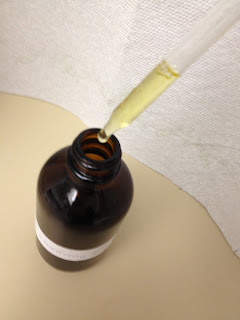
1. Take a bit of the oil mixture and rub it on your face - no need to take your makeup off prior to - it should take that off for you too. Rub it around - using upward strokes and let it soak in a bit.
2. Take a very warm, wet washcloth and lay it on your face a bit to open your pores, then slowly wipe all the oil off your face with the cloth.
That's it.
I was pleasantly surprised that my face didn't feel oily afterwards. It didn't feel tight and itchy afterwards either. Ladies and gentlemen, we may have a winner! :)

I've been using natural, organic soap on my face now since about July last year and on the whole, its worked pretty well for me - I've always had oily skin...however, the last month or two I've noticed that my skin is a bit tight and itchy and sometimes flaky after it dries from washing my face.
So I decided to try this new method to see if it really works or just makes an oil slick of my face. :)
Here's the recipe I am using, in case you want to try too.

Oily skin: Use 2/3 castor oil to 1/3 carrier oil. (Or measure out 2 tsp castor oil and 1 tsp carrier oil.) For the carrier oil i used EVOO (Extra Virgin Olive Oil) You can find castor oil at your local health food store, I found mine at Sprouts Farmers Market.

1. Take a bit of the oil mixture and rub it on your face - no need to take your makeup off prior to - it should take that off for you too. Rub it around - using upward strokes and let it soak in a bit.
2. Take a very warm, wet washcloth and lay it on your face a bit to open your pores, then slowly wipe all the oil off your face with the cloth.
That's it.
I was pleasantly surprised that my face didn't feel oily afterwards. It didn't feel tight and itchy afterwards either. Ladies and gentlemen, we may have a winner! :)
Subscribe to:
Posts (Atom)